
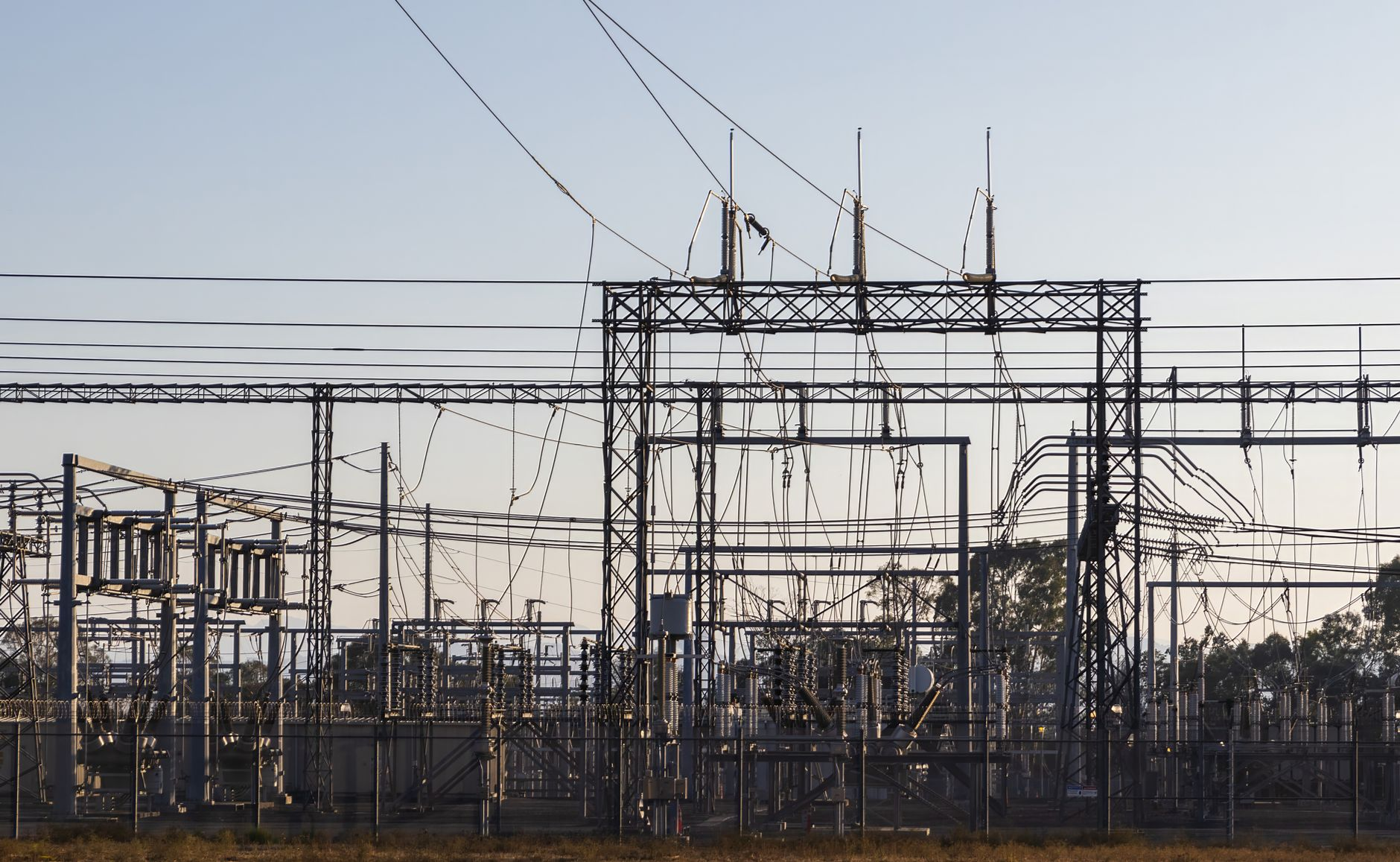
Listen up, infrastructure operators, utility leaders, and facility developers. You are standing at the edge of a half-trillion-dollar crater, and if you aren’t careful, you are going to fall right in. In 2024 alone, global data-center investment hit roughly $500 billion. You are buying land, substations, cooling plants, fiber, and backup generation. But let’s cut the nonsense—what you are really buying is a race against obsolescence.
I see you stressing out over grid delays. I see the bags under your eyes when you look at the 18-month lead times for switchgear and transformers. I get it. The pressure is immense. You have private credit funds, banks, and hyperscalers breathing down your neck, demanding gigawatt capacity yesterday. Take a breath. I know you have the grit to pull this off, and I believe in your ability to build the future. But you need to get up off the floor, stop whining about the supply chain, and start operating with surgical precision.
A conventional data center stores files, runs websites, and processes standard business software. An AI data center? That is a completely different beast. It is a power-intensive factory. It has no assembly line and ships no physical product, yet it costs billions before answering a single prompt. The economics are extreme, and the margin for error is zero. You spend enormous capital today, and then you pray that software demand arrives fast enough to fill your machines before a better chip makes them ancient history.
If you want to survive this industrial shift, you need a new operational playbook. Here is exactly how you are going to build, scale, and manage your AI infrastructure without losing your shirt.
The Gigawatt Reality Check (Stop Building Empty Shells)
Let’s get one thing straight: the cloud is not weightless. It does not float in the sky. The product you are selling begins with concrete, copper, silicon, water, and massive amounts of megawatts. Every single building you plan begins with a brutal physical question: can the local grid deliver electricity continuously, at the exact site, for years?
Microsoft recently added eighty-eight data centers in one fiscal year and another gigawatt of capacity in a single quarter. A gigawatt is not an internet metaphor, buddy. It is power-plant scale. Global data centers consumed around 415 terawatt-hours in 2024, roughly 1.5 percent of world electricity. And the International Energy Agency (IEA) is projecting demand to hit near 485 terawatt-hours in 2025 and around 950 by 2030. AI is turning computing demand into a question of power stations, transmission lines, and transformers.
“You aren’t building a data center anymore. You are building a high-performance, gigawatt-scale factory that produces computation. Treat it like one, or watch your capital burn.”
So, how do you manage this? You stop acting like a real estate developer and start acting like an energy strategist. You cannot simply drop a data center wherever customers click. Almost half of American capacity is concentrated in five regional clusters because of fiber, skilled workers, and tax incentives. But that concentration magnifies local strain. The IEA estimates that about one-fifth of planned projects could face delays if grid-integration problems are not solved.
Step 1: Audit your power reality before you pour concrete. The scarce asset is not land. It is land with power, transmission, fiber, permits, cooling options, and a utility willing to promise capacity. Do not sign a lease or buy a plot until you have a rock-solid, legally binding commitment from the utility.
Step 2: Diversify your energy portfolio. The marketing brochures love to talk about 100% clean energy. But the reality is less pristine. Renewables will supply nearly half of the additional demand, but natural gas and coal are expected to provide more than 40 percent of the increase through 2030. Solar and wind are great, but round-the-clock computing needs firm capacity. You need to be looking at contracts for nuclear, geothermal, gas, and massive battery storage. A cheap megawatt that disappears during a peak inference load is infinitely more expensive than a stable, premium-priced megawatt.
The Depreciation Death Clock (Move Faster or Die)
An office building can remain useful for decades. AI accelerators operate on a much, much faster clock. A new generation of chips will deliver more performance per watt, instantly changing the economics of the hardware you installed just 24 months ago. This makes your deployment speed the single most critical metric in your business.
Every day a chip waits in a warehouse, it consumes your capital without producing a single dime of billable computation. You are fighting a depreciation death clock.
Step 1: Synchronize your dependencies. You must coordinate construction, electrical equipment, networking, cooling, and server deliveries so the newest hardware begins earning the second it arrives. Microsoft cut the time required to move GPUs from the loading dock into live service by nearly half. You need to audit your own loading-dock-to-live-service pipeline. Where are the bottlenecks? Is it unboxing? Is it racking? Is it testing? Fix it. Now.
“Every single day a GPU sits in your warehouse waiting on a delayed transformer, it is eating your margins. Speed to live service is the only metric that matters.”
Step 2: Overhaul your thermal management. Power entering a server becomes computation and heat. As AI racks grow denser, cooling is no longer a support system—it is part of the core product. AI server power density increased elevenfold between 2020 and 2025, and it could rise another four times by 2027. Listen to me: air cooling that worked for older servers is dead. It is inadequate. You must transition to direct-to-chip liquid cooling, rear-door heat exchangers, and complex pumping systems.
But understand the risk you are taking. Higher density reduces your building footprint, but it concentrates your operational risk. A failed pump, an unstable power feed, or a thermal hot spot can interrupt extraordinarily expensive equipment. Your efficiency is measured not only in faster chips, but in how little overhead is required to keep those chips alive. Invest heavily in redundant cooling loops and automated water chemistry monitoring.
The Utilization Playbook (How to Actually Make Money)
A data center does not make money just because it is full of blinking lights and expensive GPUs. It makes money when customers buy useful output. You can rent raw accelerators, sell model training, charge per token for inference, or embed AI into software subscriptions. But these revenue streams have wildly different utilization patterns.
Training jobs are massive, power-hungry, but episodic. Inference jobs can be smaller and continuous. Enterprise demand might be predictable, but consumer demand can spike without a second of warning. Your job as an operator is exactly like running an airline: your expensive capacity only earns when it is occupied.
Step 1: Master the digital airline model. Unlike an airplane seat, computing can be rescheduled, optimized, and improved by software. You need to stack your workloads. When a massive training run finishes, your system should automatically backfill that compute with lower-priority inference tasks or batch processing. Utilization is where your physical factory meets your digital business model. If your utilization rate drops below 80%, you are bleeding cash.
“An empty server rack is a liability. A powered building without accelerators is a tomb. You only win when the digital factory is running at maximum utilization.”
Step 2: Control the supply chain bottlenecks. The gold rush is creating massive profits for everyone except the unprepared operator. Transformer manufacturers, switchgear suppliers, cooling companies, and construction contractors all sell the bottlenecks. Long lead times shift all the bargaining power to whoever controls the missing component. A finished server hall without a substation is just an empty shell. A rack without adequate cooling cannot run at full density.
You need to pre-order your critical infrastructure. Build strategic partnerships with switchgear suppliers. Do not wait until the concrete is poured to order your transformers. The most valuable skill in this industry right now is not inventing a new AI model; it is coordinating thousands of physical dependencies faster than your competitors.
The economics of an AI data center are a massive bet on demand, efficiency, and time. The IEA’s 2035 scenarios range from roughly 700 to 1,700 terawatt-hours. That enormous spread tells you everything you need to know: the infrastructure is being built before anyone knows exactly where the curve will settle.
If AI becomes the universal layer of work, today’s campuses will be the toll roads of the digital economy. If efficiency improves faster than expected, poorly planned facilities will struggle to earn their cost of capital. The cloud looks infinite on a screen, but in reality, it is a portfolio of aging machines connected to scarce power. The winners will not simply build the biggest factory. They will keep it full, efficient, and valuable while the technology beneath it keeps changing. Get to work, optimize your operations, and if you want to build autonomous systems that manage this chaos for you, our platform is here when you’re ready.