
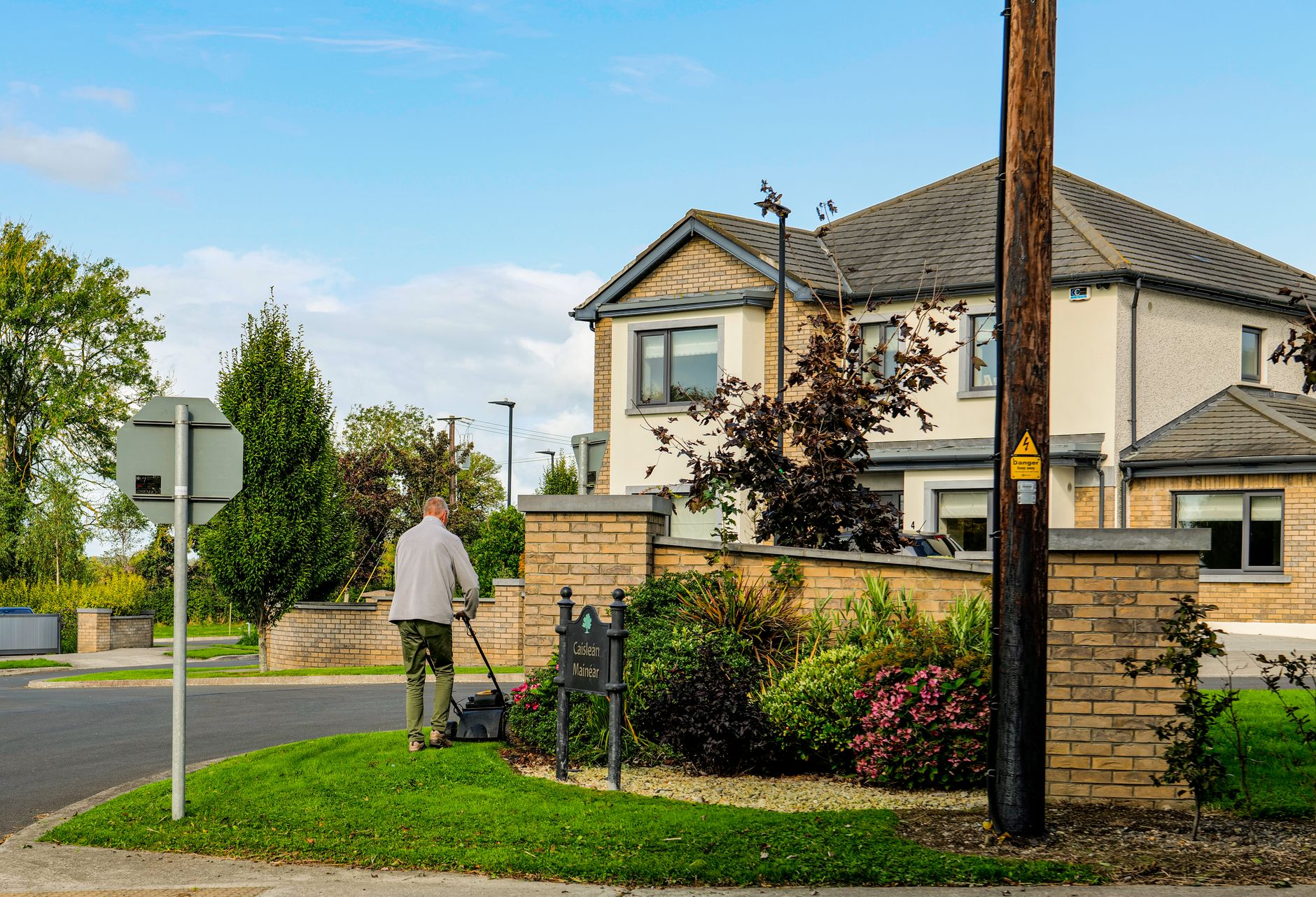
Running an outdoor service business is sweaty, physical, back-breaking work. You are out there dealing with heavy machinery, wildly unpredictable weather, and the kind of hard manual labor that leaves you physically drained by the time the sun goes down. You know the dirt. You know the equipment. You know the exact amount of effort it takes to get the job done right.
But here is the cold, hard truth.
The actual nervous system keeping your business alive doesn’t care about your calluses. It exists completely behind a screen. Customers are finding you online, they are requesting quotes through web forms at 11:00 PM, and they expect instant, frictionless digital invoices the second the work is finished. They want Amazon-level speed from a local contractor.
Yet, look at how most operators are trying to bridge this massive gap between the physical dirt and the digital demand. They are using disconnected software tools. They are running a half-million-dollar operation off a personal cell phone. They are relying on a truck dashboard covered in sun-faded sticky notes, and they are praying that pure employee memory will hold it all together.
Managing a tiny, hand-picked client list that way works well enough for a minute.
But as demand increases, relying on memory and scattered spreadsheets creates a structural bottleneck that actively prevents a business from taking on new work. It is a ceiling made entirely of your own administrative chaos.
You can have the best crews, the sharpest blades, and the hardest work ethic in the county, but if your administrative capacity snaps the moment the sun comes out, you aren’t running a business—you’re running a charity for your faster competitors.
I know you are tired. I know you are carrying the weight of payroll, equipment maintenance, and customer complaints on your shoulders. You have built something real with your own two hands, and that is worthy of massive respect. But you cannot muscle your way through an administrative bottleneck. You have to demand excellence from your systems, not just your crews.
The Capacity Paradox: Sweating in the Field, Bleeding in the Office
Let’s talk about a dynamic that quietly kills local service businesses. It is called the capacity paradox.
A company might have plenty of available bandwidth in the field to do the actual work. You have the trucks. You have the tools. You have guys standing around ready to sweat. But your administrative capacity is completely, hopelessly maxed out. You physically cannot capture the incoming demand fast enough to feed the crews you already have.
When you are driving a truck, backing up a trailer, or running a loud piece of equipment, you cannot safely answer every single call. You just can’t.
So, the phone rings. It goes to voicemail. And in the modern economy, a voicemail is just a polite way of saying goodbye.
Within hours, those unreturned voicemails and delayed estimate requests turn into lost revenue. Homeowners do not wait. They do not care that you are currently up on a ladder or under a house. They move on to the next company on their Google search list. Businesses stall their growth at this exact threshold. They stop expanding, not because they lack skilled field workers, but because administrative friction chokes their ability to onboard new revenue.
Your dashboard covered in sticky notes isn’t a filing system, man. It’s a fire hazard.
Expanding that administrative capacity does not require bloating your office payroll. You do not need to hire three more people to sit at a desk and play phone tag. Artificial intelligence and workflow automation handle the predictable, repetitive tasks without needing human intervention. It is about working smarter, not just bleeding more cash into overhead.
The Spring Rush and the Cost of a Missed Call
Think about the first warm week of spring. You know exactly what I am talking about.
A sudden shift in the weather hits, the sun comes out, and dozens of highly motivated homeowners decide to call for service on the exact same day. It is a gold rush.
The problem is, that surge in demand hits precisely when the owner and crews are already out in the field, operating loud equipment and running at maximum physical capacity. You are drowning in the work you already have, while the work you desperately need to grow is slipping right through your fingers.
The Automated Interception
When a prospective customer submits a web inquiry during this rush, an automated messaging assistant can reply instantly. It does not matter if the entire human crew is busy at a job site across town. The system answers.
The assistant autonomously asks a few structured questions to collect the customer’s address, the size of their property, the specific service they need, and their preferred timeline. It qualifies the lead while you are still holding a shovel.
From there, digital forms apply pre-approved pricing rules to generate a preliminary estimate. If the customer gets busy and forgets to open the quote, the system automatically sends a polite text reminder a few days later.
By removing the delay between a customer’s impulse to buy and the company’s response, the business plugs its largest revenue leak. You secure the job before a faster competitor can even step in. You win because you were first, and you didn’t even have to pick up the phone.
Route Density: Stop Paying for Windshield Time
Once those jobs are booked, the focus shifts entirely to field operations. For a mobile workforce, profit margin relies heavily on one specific metric: route density.
Route density is the art of serving the highest number of customers within the smallest possible geographic area.
Look at what happens when jobs are booked strictly in chronological order—the way most amateur operations do it. A customer calls on Monday, they get the 9:00 AM slot. A customer across town calls on Tuesday, they get the 10:30 AM slot. Crews are forced to zigzag erratically across a massive territory.
They are burning fuel. They are increasing vehicle wear and tear. They are racking up hours of paid travel time where absolutely no revenue is being generated.
You are literally paying your guys to sit in traffic.
Now look at the exact same workload processed through routing algorithms. Jobs are grouped strictly by geographic proximity, crew availability, and equipment needs. The software restricts travel to short, highly efficient loops. Minimizing that windshield time frees up hours of daylight.
A single crew can now complete significantly more billable jobs within an 8-hour shift. Intelligent scheduling software takes the money previously lost to the gas tank and idle transit and converts it directly into gross margin. It is free money, sitting right there on the asphalt, waiting for you to optimize your routes.
The Automated Cash Flow Engine
Operations don’t stop being chaotic just because the route is optimized. Friction happens during the workday. It is inevitable.
If a sudden rainstorm delays a project, what happens in a manual business? Someone has to sit down and manually dial dozens of people to explain the delay, apologize, and reschedule. It takes hours.
In an optimized business, the system instantly texts the affected customers with updated arrival windows, bypassing the need to dial anyone manually. It manages expectations instantly.
But the real magic happens at the end of the job.
The moment a crew finishes and marks a job complete on their phone, the system goes to work. It generates the invoice immediately. It texts a secure payment link directly to the homeowner’s phone. No more mailing paper invoices. No more waiting 30 days for a check to clear. You get paid while the truck is still in the driveway.
The system then follows up a day later to request a review, building your local SEO presence on autopilot.
This automated communication loop secures immediate cash flow. It then references the customer service history to trigger perfectly timed seasonal recommendations months later, securing the next booking, and maximizing the lifetime value of the account. It is a relentless, automated engine that never sleeps, never forgets, and never asks for a sick day.
The Human Boundary: What AI Can Never Touch
There is a persistent cultural anxiety out there. People hear the words “artificial intelligence” and they immediately think it means eliminating human field workers. They think the robots are coming for the blue-collar jobs.
Stop it. That is a fundamental misunderstanding of the technology.
Automation in a physical service business operates within a strict, defined boundary. It exists solely to handle algorithmic chores. It does data entry. It does calendar math. It sends repetitive reminders. It does the soul-crushing administrative work that humans hate doing anyway.
Software cannot verify a complex project scope on a muddy job site. Software cannot deliver physical quality control. Software cannot build trust by looking a homeowner in the eye and shaking their hand in the driveway.
Those things require irreplaceable human judgment. They require a heartbeat.
Technology acts as a protective layer that absorbs administrative friction. It clears the static so your employees can focus entirely on high-value expertise and building long-term customer relationships. You aren’t replacing your guys; you are giving them the freedom to actually do the job they were hired to do, without being bogged down by paperwork.
Diagnosing the Leak: How to Actually Fix Your Operations
If you are looking at your business right now and realizing that you are bleeding revenue through these administrative gaps, do not panic. And more importantly, do not just go out and buy a dozen disconnected software subscriptions hoping one of them is a magic bullet.
Start by diagnosing your single largest operational leak.
Figure out exactly where you are losing time or money. Is it missed calls during the spring rush? Is it uncollected invoices? Is it terrible route density? Map out your current manual workflow step-by-step on a whiteboard.
If your internal responsibilities are unclear, or if your pricing rules are broken and inconsistent, automation will simply speed up the confusion. You have to fix the process before you automate the process.
The Pilot Program
Once you have mapped the leak, pilot your chosen platform with a limited scope. Do not roll it out to the entire company on day one. Test it with one crew. Test it on a single service line.
Monitor the hours it saves your office staff. Measure the new revenue it captures that would have otherwise gone to voicemail. Ensure there is a clear, undeniable return on investment before you scale it up.
Connected workflows and intelligent scheduling are no longer futuristic novelties reserved for massive corporations. They form a mandatory operating system for the modern era. They give local, physical businesses the exact tools they need to capture surging demand, miss fewer jobs, and confidently scale without burning out the owner.
You have already done the hard part. You built the business. Now, build the system that lets you actually enjoy it.